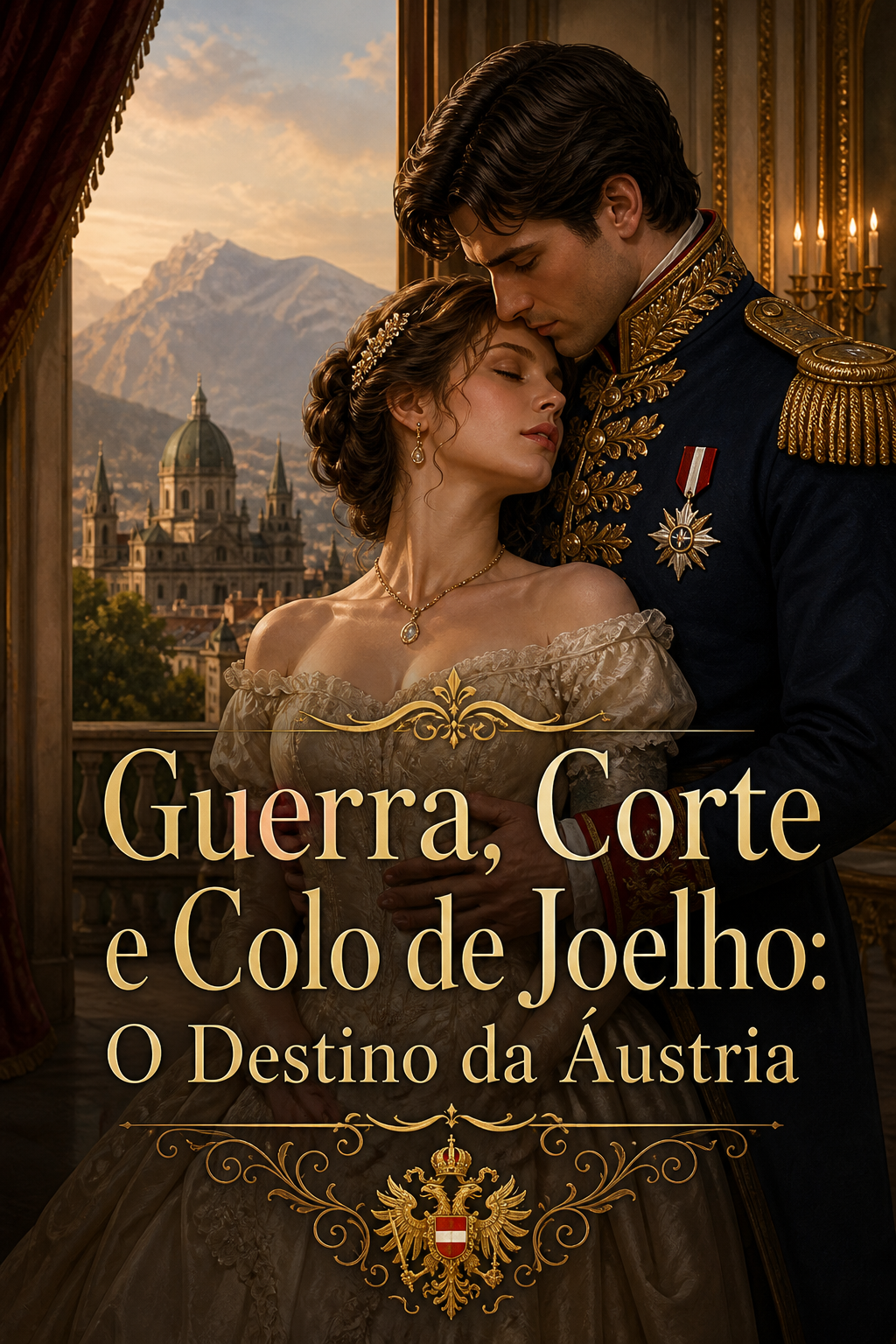
Guerra, Corte e Colo de Joelho: O Destino da Áustria
Deixe que outros travem guerras; tu, afortunada Áustria, casa-te! O que o deus da guerra pode te conceder, o deus do amor também pode. A fumaça das Guerras Napoleônicas já se dissipou, e o sistema de Viena, que outrora trouxe paz à Europa, está agora repleto de rachaduras. Por trás da aparente calma da paz, escondem-se as turbulentas correntes de uma época em ebulição, o silêncio que antecede a tempestade. No ar, paira uma névoa densa de suor evaporado; a fumaça sufocante dificulta a respiração. Sobre uma mesa elegantemente posta, um grupo de militares e gorduchos de terno discutem acaloradamente, banqueteando-se com o grande prato chamado mundo. Na parede, está pendurado um autorretrato de Van Gogh, enquanto aos ouvidos ressoa uma valsa dos Strauss, pai e filho. De repente, a música transforma-se em uma marcha, e a cena se desloca para o campo de batalha: soldados marcham em fileiras uniformes em direção às metralhadoras e ao arame farpado. Um projétil explode no chão e, após a fumaça dissipar-se, inúmeros cavaleiros investem contra as posições da artilharia. Em meio ao estrondo ensurdecedor, um tanque a vapor cospe línguas de fogo sem cessar. Um avião de madeira rasante sobrevoa o solo, lança bombas e, em seguida, sobe rapidamente, rompendo as nuvens e irradiando luz por todos os lados.
Guerra, Corte e Colo de Joelho: O Destino da Áustria
1834, Austrian Empire, Vienna.
The sky was a clear blue, the river waters pristine—this was a city fit for living. Yet it hardly resembled the capital of a great power in the nineteenth century.
In contrast, cities like London bore gloomy skies, heavy smog, and dark rivers. Though environmentally harsh, such sights symbolized the strength of their nations.
Within a grand building adorned in Baroque style externally, the interior reflected Rococo elegance. Antique furnishings of every kind filled the rooms—from Eastern porcelain to raw Baltic amber—an impressive collection indeed.
Its master was none other than Francis II, the last Holy Roman Emperor and the first Emperor of Austria.
At this moment, Francis II faced a difficult choice: to select an exceptional heir or to uphold tradition.
Perhaps because of a deep familial bond, Francis II had always doted on his special grandson, Franz. A healthy boy without any intellectual disabilities, he was both the emperor’s hope and the empire’s.
Indeed, the Austrian Empire then grappled with a lack of suitable successors.
Today, in the nursery, young Franz arranged five letters into a combination that Francis II could not ignore.
“A.E.I.O.U.”
This cryptic phrase had been left by Frederick III in St. Stephen’s Cathedral, still engraved above the altar. It was also the only way Franz Joseph could think of to capture the old emperor’s attention.
“Austria will always be...” Francis murmured.
Frederick III was the last Holy Roman Emperor crowned by the Pope in Rom